
Bonnie Wright
I like to travel. And along the way I like to ask other travelers which places/experiences from their own globe trotting stand out the most. On a cruise to Antarctica I asked Phillip, whose home is Australia, what he would recommend and he said gorilla trekking in Africa was phenomenal.

OUR CHEER LEADER
My introduction to the Batwa Pygmies and my new charity explained:
In a coffee shop in Norway, Sverre told me about the time he and his girlfriend, on a whim, went on a memorable gorilla trekking adventure in Africa years ago. And back home at the office in Pennsylvania, Thomas told me his gorilla trekking experience was simply amazing.
I booked an 11 day trip to Uganda with Gate 1 Travel, Discovery Small Groups, for January, 2025, which included a mix of big game safaris; stops along Lake Victoria and a cruise on the Nile river with its hippos, crocodiles, elephants and beautiful birds; hikes through the forest to spot many species of monkeys and chimpanzees; long drives on unpaved roads through the high country with its beautiful vistas and friendly waves from locals of all ages that we passed along the way, going about their daily businesses, colorfully dressed and many carrying items balanced on their heads; and, lastly, two nights at the Four Gorilla’s Lodge in Bwindi Impenetrable Forest in southwest Uganda, from where the much anticipated gorilla trekking would commence the following day.
After a brief introduction to the lodge and our individual cottages we loaded back into the two Range Rovers and headed to the nearby village of Rushaga. We had barely arrived at an outdoor display of hand made items for purchase when it began pouring rain. We sheltered in a nearby partially built school where we were entertained with beautiful singing and energetic dance by unusually small men and women I learned were the Batwa, formerly called pygmies, a people who for thousands of years dwelled and thrived in the forests of Bwindi as sustainable forest stewards until they were forced to leave it in 1991.
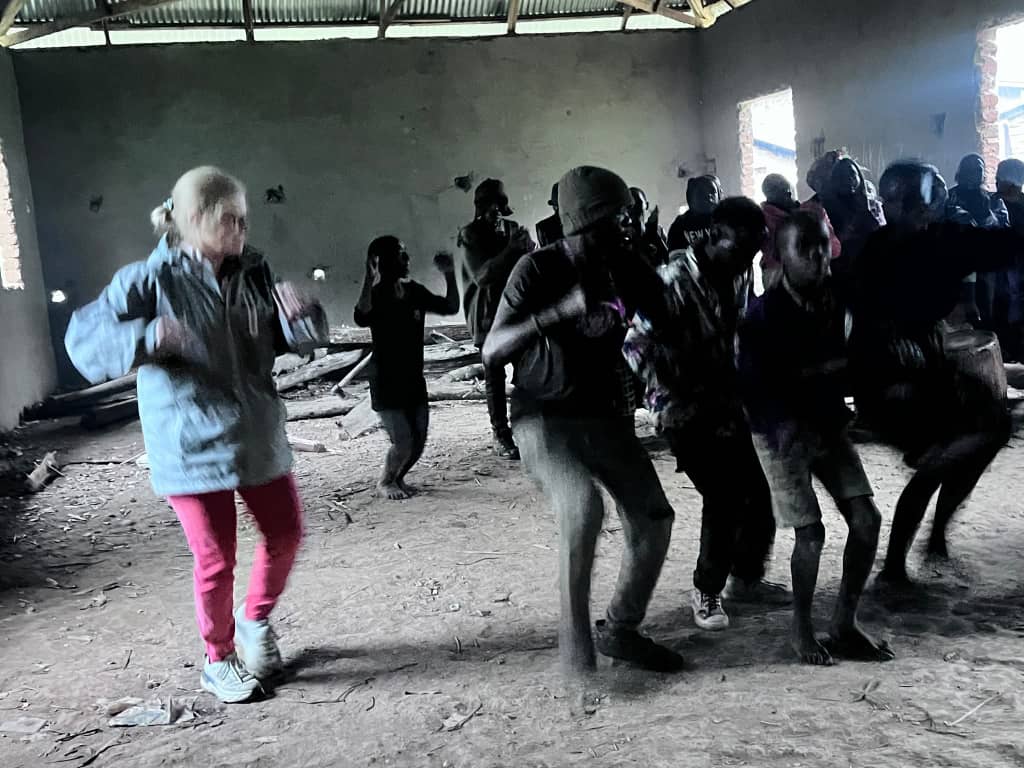
At that time it is my understanding that the government wanted to protect the endangered mountain gorillas and also encourage tourism. Bwindi Impenetrable Forest was designated a national park. The Batwa were given no compensation or land, and resettlement plans were non existent. The forests were reclassified as protected areas for wildlife, and indigenous use of the forest was deemed as illegal poaching or encroachment, and trespassers can and will be shot. Batwa land ownership had never been recognized. They were viewed as primitive, and they had no political representation or legal recognition.
As a result, the Batwa remain intergenerationally impoverished, homeless, socially excluded, with high rates of illiteracy, malnutrition, illness, and child mortality. The average life expectancy for the Batwa is 28 years.
We asked if we could see one of the homes, and we walked through the rain and the mud to a grass and mud hut with many bare footed children out front, several with extended abdomens consistent with chronic protein malnutrition, intestinal parasites, chronic diarrhea, enlarged liver, and/or severe anemia affecting abdominal muscle tone. We were told this residence was for a family of 8: two parents and 6 children.
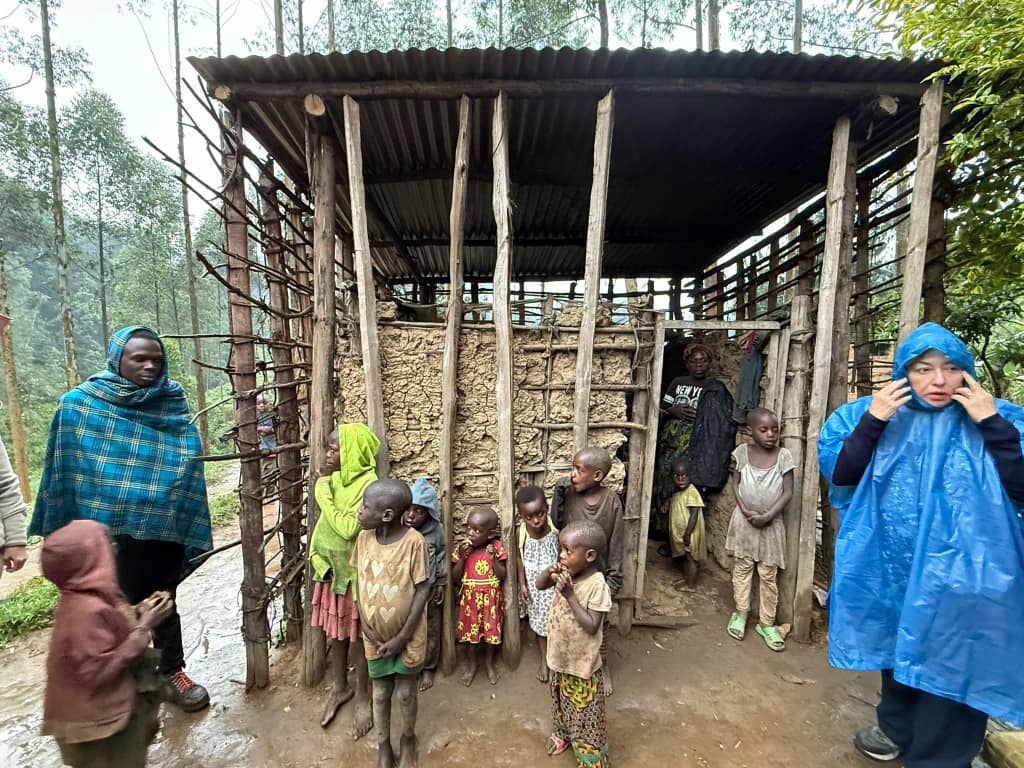

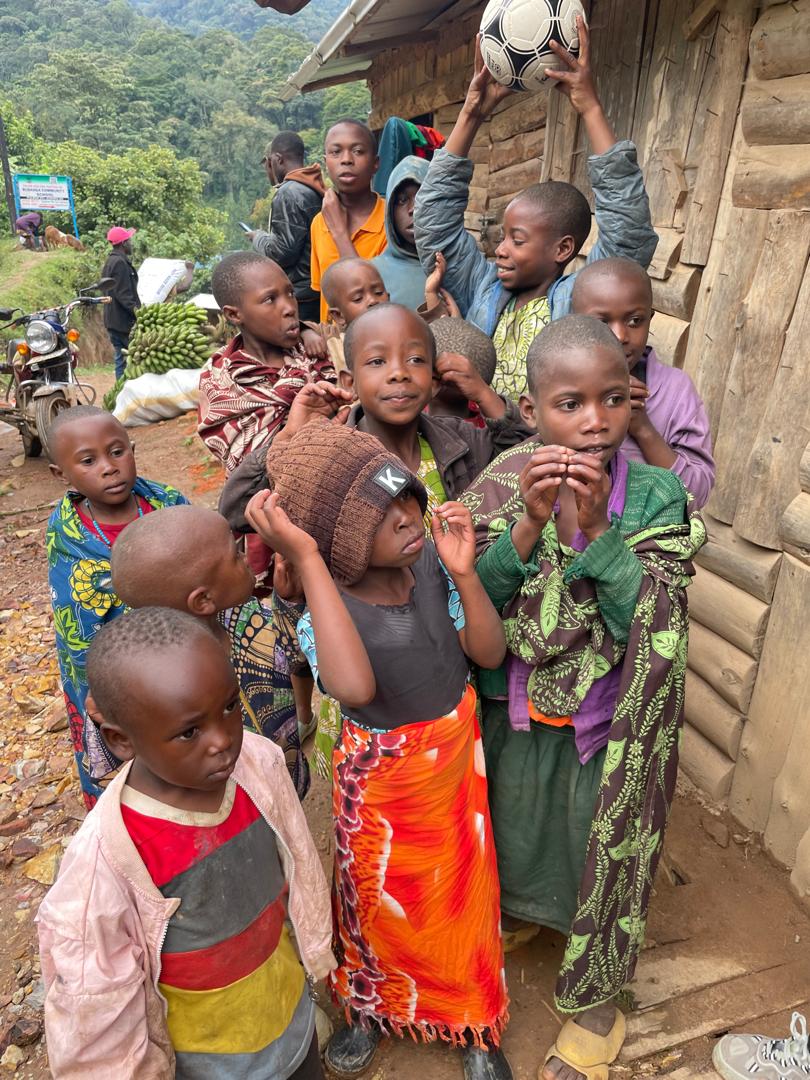
I wanted to see inside the hut, get a glimpse of how they live. With permission to do so, I waded through the children to the only door and came eye to eye with a small mother wearing a New York tee shirt, long skirt, and ski hat. She was not smiling. I imagined she felt embarrassed, maybe annoyed by our intrusion. She was standing by a hammock that was the bed for her and her husband, and under which the children slept. In one corner was a young boy stirring a fire. Other than a large bag of grain and some cooking pans there was nothing else in this bare floor residence.
I thanked her for letting us visit and for letting me take some photos. As I was leaving the hut a young child looked up at me and whispered, “money.” I didn’t have a cent – I had given my last bit of cash to an elder at the school in appreciation for the entertainment, not knowing we would be going further to a residence. I felt awful, embarrassed I had not considered bringing enough tip money for unexpected experiences, but I also felt a kind of shame noting the disparity in comparing this level of poverty to my good fortune, which allows me to travel around the world and stay in comfortable lodges and feast several times a day. I vowed to myself I would give them money through a charity once I got home.
Though the grand finale of the trip, the actual trekking to find the magnificent gorilla families was challenging but truly remarkable and memorable, my focus remained on the plight of the Batwa.
In the gift shop at Four Gorillas Lodge there was some art work for sale. I was especially impressed with a few gorilla scribbles with magnificent amber eyes and wanted to purchase one, but as mentioned I had no cash, and I learned there was no ATM and the credit card machine was not working. I took a photo of one of the scribbles, which included the artist’s name, Kaplan Gadson.
Once back home I googled Kaplan Gadson, learned he had a social media account, and I sent him a message, not really expecting a response. But he did respond! He shared pics of some of his pieces, two of which are now framed and hanging in my home here in Pennsylvania. In the course of our discussions Kaplan shared that he was involved with art and music education—drawing, painting, pottery, choir—including working with disadvantaged children in Buhoma, Uganda.
I asked if he had any contacts with the Batwa in Rushaga, three hours drive from Buhoma, and although he said he had no direct contact with them he mention a friend, Frank Turahukire, who was the manager of Four Gorilla’s Lodge, where we stayed on our tour and where I first saw Kaplan’s artwork! Frank said he knew of the exact Batwa family we visited in January 2025. I now had a direct path to that family I met and the people whose story so moved me.
And so it began.
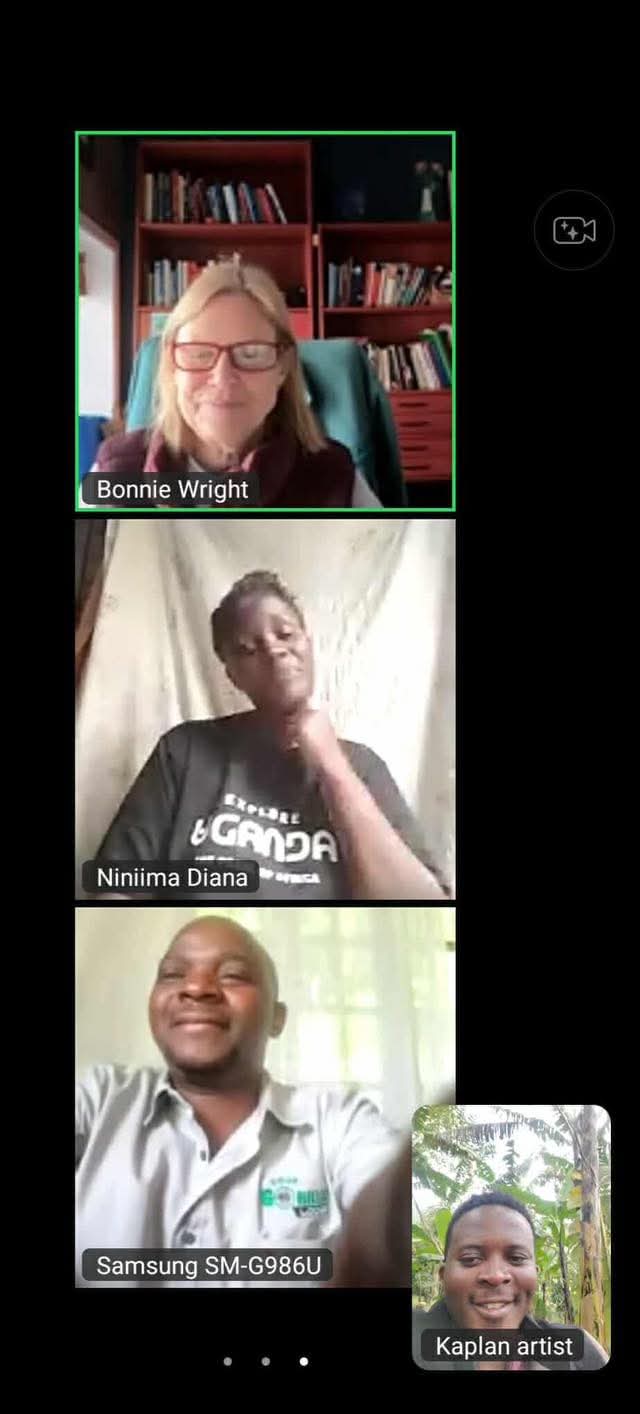
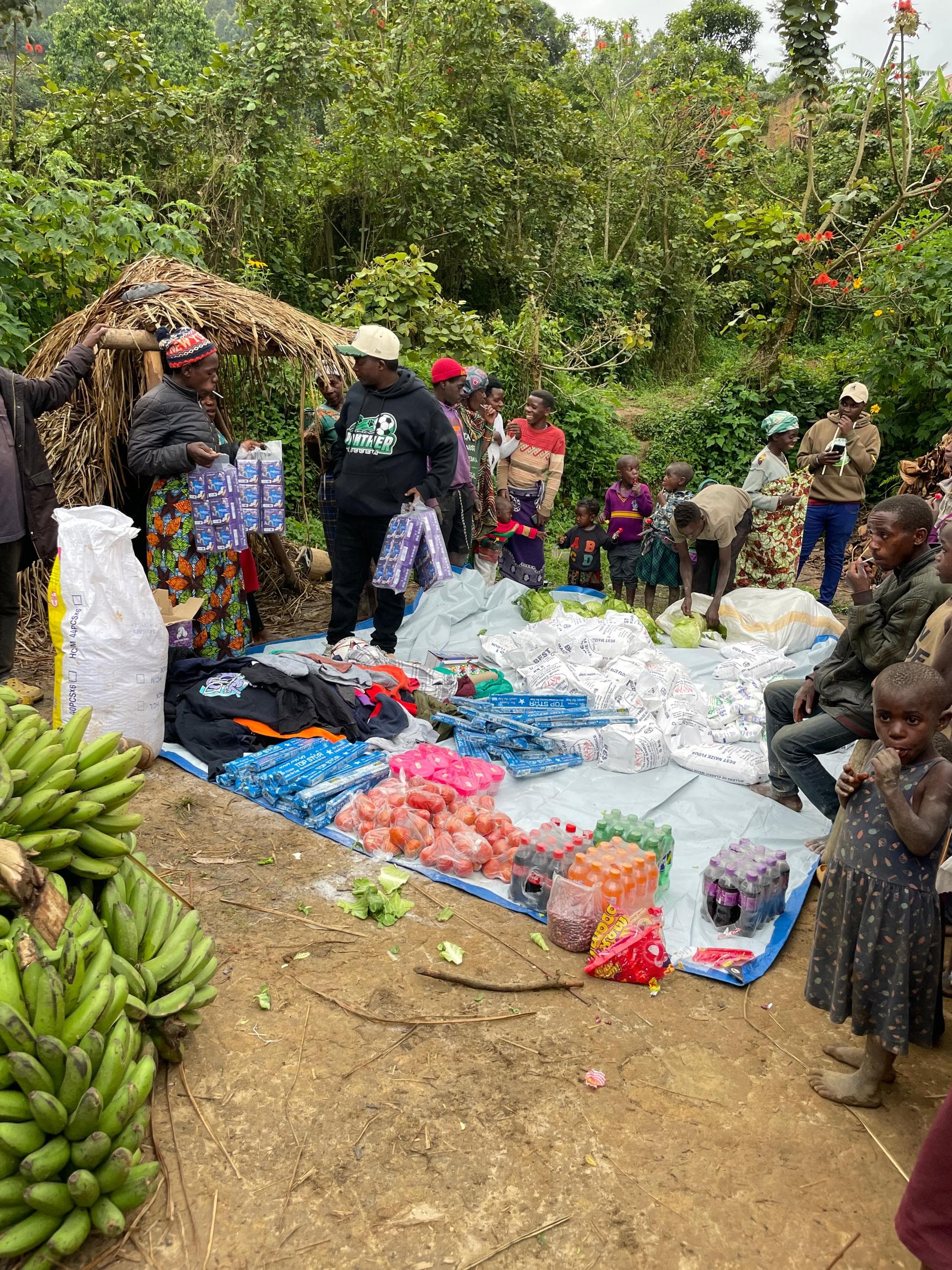
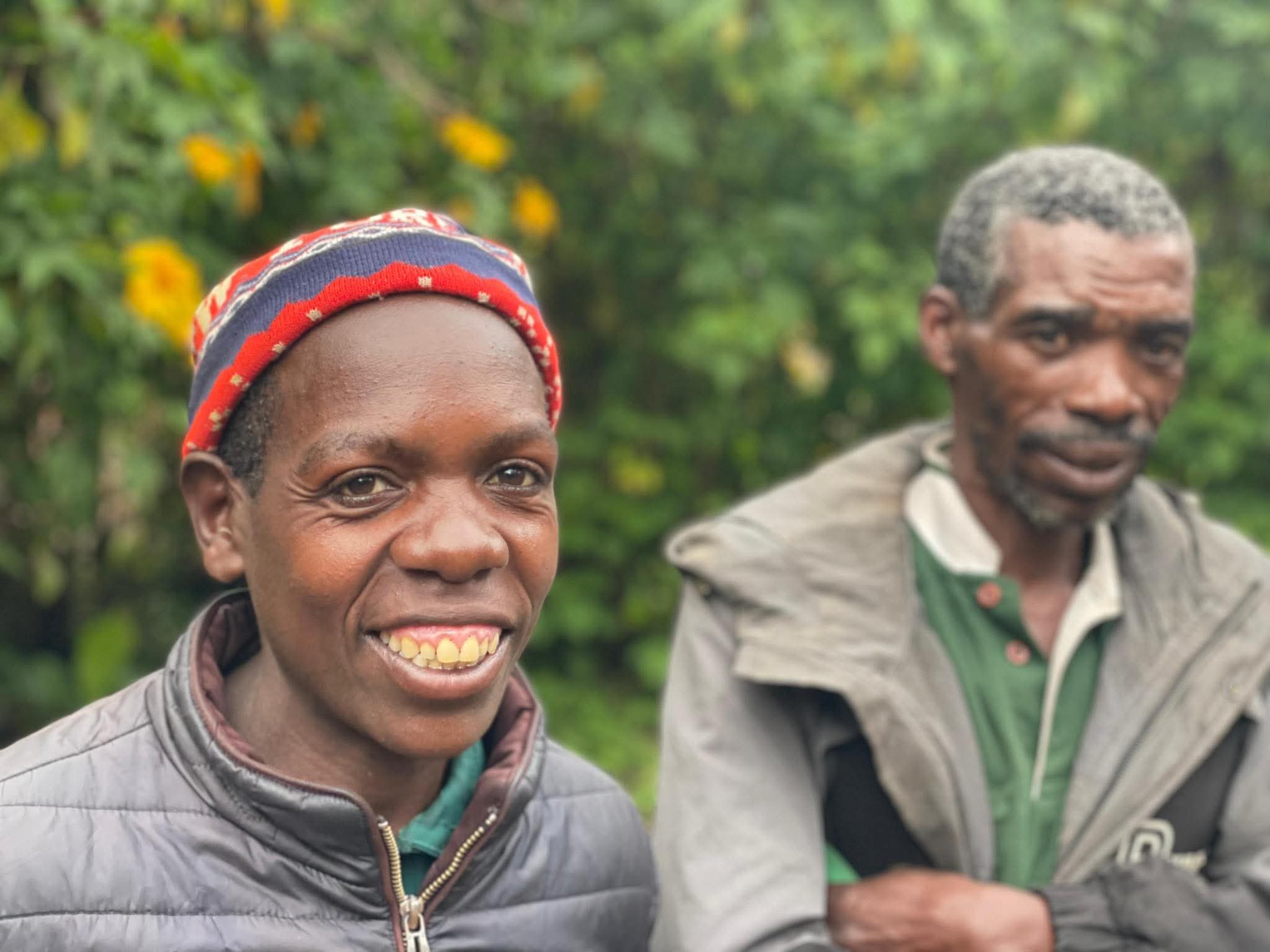
With the efforts of Kaplan Gadson Musinguzi, Frank Turahukire, Diana Niniima, Joseph Akampurira, and me a new NGO was created November 22, 2025! Bwindi Little Angels Organisation (with an s) is a charity created to bring art, music, and opportunity to underserved children, including Batwa children. Additionally, BLAO has taken on the project of elevating the impoverished Rushaga Batwa families to self sustaining, healthy, productive and dignified peoples.
In December the first monthly distribution of food was obtained at a market by BLAO and delivered to 45 Batwa people in the village of Rushaga. In the photos and videos of the event that were sent to me from the team, I saw the mother I had seen in that hut back in January. I saw her smile! But during an interview with Kaplan I also heard her share the the ongoing challenges of being a homeless Batwa family, marginalized from and exploited by the community.
I am so grateful to Gate 1 Travel Discovery Tours not just for giving me the opportunity to be fully immersed in nature, but for taking me to a village where I learned about and even danced with the people who were truly part of the forest for thousands of years, the Batwa of Bwindi, Uganda who, now displaced, are also endangered, at risk of becoming extinct, and warrant assistance and protection. Their needs are great and include food, shelter, medical care and, perhaps most importantly, fertile land they can finally call home.
BLAO will be exploring possibilities for budgeting and implementing these projects, driven by the preferences of the Batwa, being mindful of cultural preservation as well as the challenges and sensitivities of broader social integration.
We invite you to join us and welcome your support!! Share your ideas!! Become a volunteer!! Donations can be made through our website www.BwindiLittleAngels.org
With heartfelt thanks,
Bonnie Wright MD
Cheltenham, Pennsylvania USA